The Lyceum Industry Weekly — May 01, 2026
Week of May 1, 2026
The Big Picture
Hollywood's biggest deal isn't done — it's just entering its expensive middle act. The Paramount–Warner Bros. Discovery merger picked up its first consumer lawsuit this week, David Zaslav's $165 million pay package gave opponents a populist gift, and SAG-AFTRA is racing a clock that runs out before Christopher Nolan walks into the next room. Meanwhile, a 20-year-old movie about a fashion magazine is about to save Disney's summer.
This Week's Stories
Miranda Priestly Is Back — and She Just Saved Disney's Summer
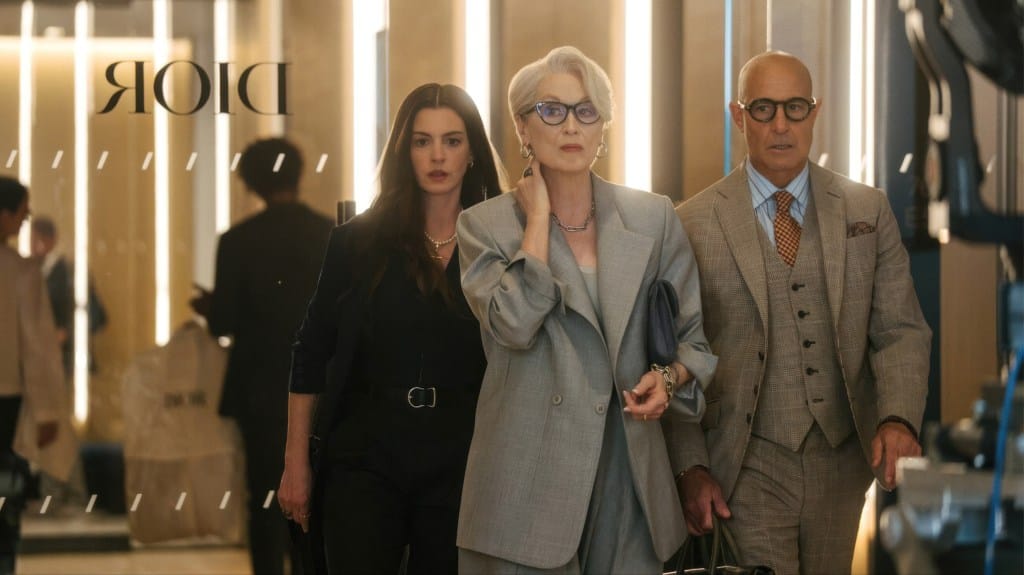
The most interesting box office story of 2026 is not a superhero movie. It's a sequel to a 2006 comedy about a fashion magazine — one that opened this weekend tracking for an enormous debut.
Per Deadline, The Devil Wears Prada 2 is looking at a $73 million to $80 million domestic start, with a near-$180 million global opening across a 100% offshore footprint. Boxoffice Pro went higher, calling a potential $95 million to $105 million domestic debut "the alchemy of all returning principals" — Meryl Streep, Anne Hathaway, Emily Blunt, Stanley Tucci, director David Frankel, and screenwriter Aline Brosh McKenna all back at once. Presales hit $20 million, per Deadline.
Here's the part that should get studio strategy meetings excited or nervous, depending on who you are: as Disney mines the Fox library it acquired in 2019, it slotted a Prada legacyquel into the release date originally held for an Avengers film, according to DNYUZ. Disney replaced its biggest franchise with a movie about Meryl Streep being mean to Anne Hathaway. The original made $326 million worldwide on a $41 million budget. This one may outgross that in its opening weekend.
If it holds through Mother's Day, female-skewing legacy IP becomes a confirmed summer tentpole category — not counterprogramming, not a soft-open alternative, but the actual main event. If it collapses in week two, it's a marketing-driven nostalgia spike and the Marvel-shaped hole in Disney's calendar gets harder to fill. The signal to watch is the second-weekend hold; legacyquels live or die there.
David Zaslav Made $165 Million Last Year. For a Deal That Didn't Happen.
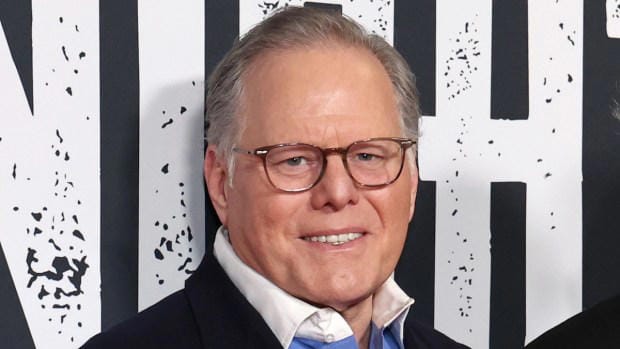
Try this sentence: the CEO of Warner Bros. Discovery received roughly $110 million in one-time stock options for leading a corporate split that is no longer happening — and his total 2025 package landed at $165 million.
Per Variety, the option award was originally tied to Zaslav's plan to break WBD into two entities, a plan that gets superseded if Paramount Skydance closes its acquisition. Either way, he keeps the options. The Wrap notes the package puts him well ahead of Disney's Bob Iger ($45.8 million), Paramount's David Ellison ($63.2 million), and Comcast's Brian Roberts ($35.1 million). Yahoo Finance reports that if the Paramount deal closes, Zaslav's exit could exceed half a billion dollars.
Shareholders already voted against the merger-related parachute by a wide margin at last week's special meeting — but those say-on-pay votes are non-binding, and the board can pay him anyway. They almost certainly will.
The strategic problem isn't the math; it's the timing. SAG-AFTRA is back at the bargaining table this week arguing for AI protections. The merger narrative is centered on cost discipline. A nine-figure CEO package lands in the middle of all that and hands every union, every regulator, and every politician a cleaner rhetorical weapon than they had Monday morning. Watch the June 9 annual meeting, where Zaslav's 2025 compensation goes to a separate advisory vote — and watch how often that $165 million number shows up in SAG-AFTRA's public messaging between now and June 30.
The First Lawsuit to Actually Try to Unwind the Paramount-WBD Deal Just Landed
A handful of streaming subscribers filed an antitrust suit Thursday seeking to block the $110 billion Paramount Skydance–Warner Bros. Discovery merger. According to Variety, the plaintiffs are three current Paramount+ subscribers and two prospective ones — and they're not just trying to stop the WBD deal. They want to force Skydance to divest Paramount itself, unwinding last year's acquisition entirely.
Per Deadline, the complaint argues that placing CNN and other news assets under Paramount's control "would reduce the number of independent owners capable of sustaining national television news operations at scale." The Hollywood Reporter notes that California is currently investigating the merger and would likely lead any state-AG effort to block the deal.
Private antitrust suits rarely prevail outright. That's not really the point. This filing translates merger harm into language regulators and judges can repeat — fewer films, narrower release slates, less local cinema variety — and creates a paper trail the California AG's office can borrow from. It's the opening brief in a much larger argument, and the deal is targeting a Q3 close.
Success for the plaintiffs looks like discovery: forcing internal Paramount documents into the open. Failure looks like a quick dismissal that nobody remembers in six months. The signal to watch is whether any state AG files in parallel within the next 60 days. If California moves, the merger's regulatory timeline gets considerably uglier.
SAG-AFTRA Is Back at the Table — and the Clock Is Ticking
SAG-AFTRA — the union representing actors, stunt performers, and broadcast journalists — resumed talks with the AMPTP, the studios' negotiating alliance, on April 27 after pausing to let the WGA finish its deal. Per Deadline, both sides are aiming to reach a tentative agreement before the Directors Guild, now chaired by Christopher Nolan, opens its own negotiations May 11. Sources tell Deadline the parties are "not far off" — but a few key issues remain.
The sticking point is the one it has always been: AI. SAG-AFTRA chief negotiator Duncan Crabtree-Ireland has been explicit that airtight AI protections are required for any longer-term deal, per Deadline. The WGA's recent agreement set a precedent SAG-AFTRA may not love: writers got notification rights when their work is licensed for AI training, but no compensation for that training.
Talent isn't waiting for contracts to solve this. According to Variety, Taylor Swift's company filed trademark applications covering signature voice phrases and a visual likeness — a preemptive legal scaffolding against AI imitation, using trademark law to attack marketplace confusion when contract law isn't ready yet. Expect more A-list filings to follow.
Both the SAG-AFTRA and DGA contracts expire June 30. If the union closes before May 11, AI protection becomes the template for every guild after it. If talks slide past Nolan's start date, AMPTP's bargaining bandwidth splits across two unions and the leverage math gets considerably more interesting. Silence this week is the good signal. Joint statements about "productive discussions" are the bad one.
Netflix Is Betting £500 Million That *The Crown* Can Live Forever
While Paramount tries to absorb Warner Bros., Netflix quietly committed to what may be the most expensive prestige TV bet of the decade. According to GB News, Netflix has approved a Crown prequel covering the British royal family from Queen Victoria's death in 1901 through Princess Elizabeth's 1947 wedding, with a reported budget of up to £500 million — roughly $630 million. Peter Morgan, who guided the original to 24 Emmys, is expected to return.
A caveat worth flagging: per Men's Journal, Netflix has not formally confirmed the deal. The reporting traces back to the Daily Mail's Richard Eden, who has a strong track record on royals coverage specifically. Treat as highly credible but not yet official.
The strategic logic is the part that matters. Netflix recently disclosed that adaptation-based titles drove more than 9 billion global views in 2025 — roughly 20% of all hours watched on the service. A £500 million prequel commitment paired with that adaptation push reads as a thesis: Netflix doesn't need a merger to compete; it needs franchises with built-in global pull and merchandising potential that play across both subscription and ad-supported tiers.
The risk is creative. The original Crown drew its power from events viewers half-remembered — Diana, the abdication, Charles and Camilla. A 1901–1947 prequel is historically rich but emotionally further away. Success looks like Edward VIII's abdication landing with the same weight Diana's death had. Failure looks like House of the Dragon without the dragons — beautifully mounted, modestly watched, an expensive lesson in why prestige IP doesn't always travel backward in time.
⚡ What Most People Missed
- The Paramount–WBD foreign ownership structure is a regulatory wildcard: Per the FCC filing, the merged company would be 49.5% foreign-owned, with roughly 38.5% held by three Middle Eastern funds — including a 15.1% stake from Saudi Arabia's Public Investment Fund. The FCC review is the lever nobody's talking about yet.
- The Pitt hit No. 1 on streaming — and the timing is convenient: Max landed an unambiguous broad-audience hit in the middle of being acquired. A healthy Max is a more valuable Max, and that valuation argument writes itself for Paramount's bankers. Procedurals are also cheap, repeat-viewer catnip — expect copycat greenlights.
- 'Scrubs' and 'Shifting Gears' got renewed; Rachel Bloom's pilot didn't: ABC told the entire creative community what its risk tolerance is in a single afternoon. Disney claims the Scrubs premiere reached 11 million cross-platform viewers in 35 days. Familiar brand, broad demo, advertiser-safe. Auteur pilots are getting a tougher room.
- Tubi turned a Reddit horror obsessive into a programming partner: Tubi integrated a four-year crowd-sourced list categorizing 666 niche horror titles as a featured Top 100 for May. It's a quiet admission that algorithmic curation can't reach the deep catalog corners human tastemakers can — and a free-marketing playbook every AVOD will copy.
📅 What to Watch
- If SAG-AFTRA closes before May 11, the WGA's "notification but no compensation" AI template could lock in licensing terms that limit performers' bargaining leverage and reshape residuals over the next contract cycle.
- If California's AG files in parallel with the consumer suit within 60 days, Paramount's Q3 close target becomes considerably harder to meet as regulators and state enforcers add coordinated legal pressure.
- If Devil Wears Prada 2 holds above 50% in week two, expect three female-skewing legacyquels to get fast-tracked development deals before July as studios chase durable second-week holds.
- If the FCC publicly opens a foreign-ownership review of the merger, the political coalition opposing the deal gains a national-security framing that could draw new federal scrutiny and slow approvals.
- If The Pitt stays at No. 1 a second week, the next round of streaming greenlights will tilt toward 22-episode procedurals that drive long-tail ad inventory and away from 8-episode prestige limiteds that are harder to monetize.
- If another A-lister files Taylor Swift–style trademarks on voice or likeness, talent agreements industry-wide could be rewritten by Q4 and AI-imitation insurance could emerge as a commercial product.
The Closer
A CEO collects $165 million for a corporate divorce that got called off, five Paramount+ subscribers walk into federal court asking a judge to reverse-engineer a merger, and Miranda Priestly returns to save the release date Marvel vacated. The most reliable bet in Hollywood right now is a fashion magazine from 2006 — which tells you everything about the next four years of greenlights and absolutely nothing reassuring about the next four years of original ideas.
See you next week.
If you know someone who's still trying to figure out why Zaslav got paid for a deal that didn't happen — forward this. They'll thank you.