Healthspan Weekly — Apr 06, 2026

Photo: lyceumnews.com
Week of April 6, 2026
The Big Picture
This was a week of dashboards replacing snapshots. A large imaging study showed your organs age at different speeds — and the gaps between them predict disease better than any single number. The NIA told the field its biomarker clocks are impressive but often cannot distinguish cause from consequence. And an old gut transplanted into a young mouse made the young mouse old, suggesting the microbiome isn't just along for the ride. Meanwhile, Eli Lilly shipped the first oral GLP-1 for weight loss, the immune-aging field moved from describing decline to cataloging specific repair levers, and a growing chorus of researchers argued that aging isn't a defect to fix but a coordination failure to restore. The through-line: the science is getting more precise, more systemic, and — in the case of a multivitamin that nudged epigenetic clocks — sometimes surprisingly simple.
This Week's Stories
Your Organs All Age at Different Speeds — And Now MRI Can Tell Us How
Researchers applied deep learning to MRI and other imaging from large population cohorts to estimate biological age for individual organs — brain, heart, liver — and then followed who got sick or died. The combined multi-organ age profile predicted mortality and disease patterns more accurately than any single organ's readout or calendar age alone. Different organ-age gaps mapped to different diseases: an old-looking liver flagged metabolic risk; an old-looking brain flagged neurodegeneration.
If this scales, it transforms biological age from a single bragging-rights number into a clinical dashboard. A 60-year-old with a 50-year-old heart and a 70-year-old liver needs a different plan than someone with the reverse. Expect high-end longevity clinics to adopt organ-specific imaging age within a year; the real test is whether insurers and health systems follow. The signal to watch: if any large health system pilots organ-age triage for preventive care, the reimbursement conversation starts for real.
The GLP-1 Era Goes Oral: FDA Approves Lilly's Once-Daily Weight-Loss Pill

On April 1, the FDA gave accelerated approval to Eli Lilly's Foundayo (orforglipron) — the first once-daily oral GLP-1 drug for adults with obesity or overweight with related conditions. Unlike earlier oral diabetes formulations, this pill has no food or water restrictions. In clinical trials, the highest dose produced average weight loss of 12.4% over the study period (about 27 pounds). Lilly says it's shipping now at $149/month for self-pay.
This matters less for the weight-loss number than for what convenience does to adoption curves. Injections create a psychological and logistical barrier that limits who uses GLP-1s and for how long. A daily pill that fits into any routine could dramatically expand the user base — which also means dramatically expanding the population exposed to a drug class whose long-term safety profile is still being written. The failure scenario: if real-world adherence or side-effect patterns disappoint, the oral form could paradoxically accelerate safety scrutiny by putting millions more people on the drug before long-term data mature. Watch early pharmacy-fill and discontinuation rates.
Your Old Gut Can Age You — Even If It's Not Yours
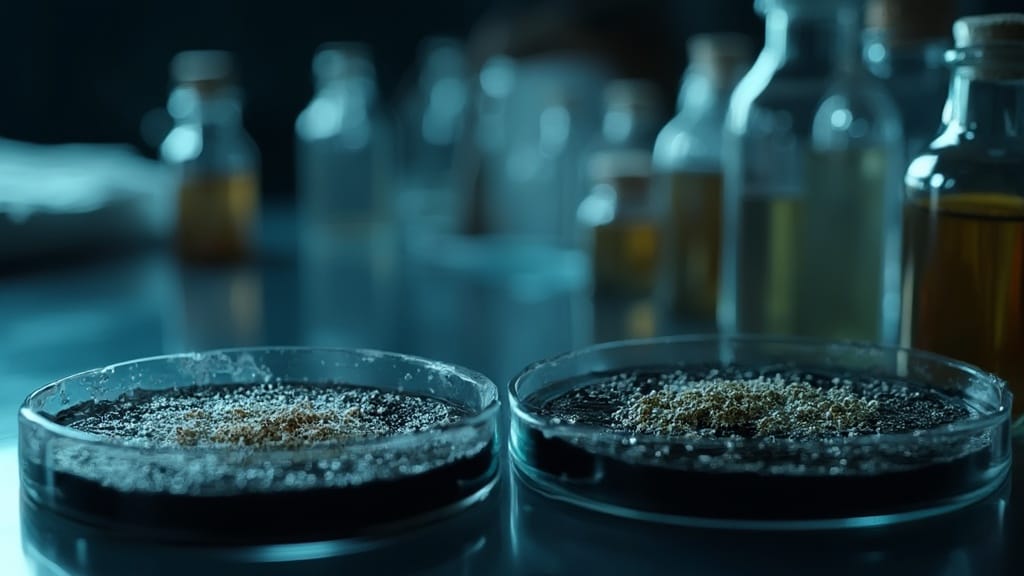
Most longevity research asks what to add. This study asked what happens when you transplant an aged mouse microbiome into young adults. The answer: lasting increases in anxiety, immune dysfunction, oxidative stress, accelerated biological-age markers, and shorter lifespans. That supports a causal role for the aging gut microbiome, not just a correlate.
The translational question is immediate: should human fecal-microbiota-transplant trials screen for donor age and track long-term aging endpoints? If even a fraction of this signal translates to people, microbiome modulation joins senolytics and metabolic drugs as a core geroscience strategy. The failure mode is that the mouse-to-human gap proves too wide, or that the relevant microbial species differ enough to make donor-age screening irrelevant in practice. The tell: any human FMT trial that adds biological-age endpoints would signal the field is taking this seriously.
Fat Cells, a Single Enzyme, and How Metabolism Slides into Inflammaging
A new mouse study traced why aging visceral fat becomes such an inflammation factory and landed on one enzyme: Pck1, which helps fat cells make glucose. When researchers reduced Pck1 in adipocytes, mitochondria faltered and the cells flipped into a senescent, pro-inflammatory state — accelerating metabolic dysfunction body-wide. Restoring Pck1 activity or clearing the senescent fat cells reversed some of the damage.
This positions adipose senescence as a central node, not a peripheral consequence. If your fat cells can't maintain their energy metabolism, the downstream effects hit joints, liver, and cardiovascular function. The practical implication isn't "boost Pck1" — it's that interventions preserving mitochondrial health in fat tissue (exercise, metabolic drugs, possibly targeted senolytics) may have outsized systemic returns. Watch for clinical trials that specifically enroll metabolically unhealthy older adults rather than generic "aging" cohorts.
Aging Biomarkers Are Booming — The NIA Just Pointed Out the Holes in the Boat
The National Institute on Aging convened top researchers to stress-test where epigenetic clocks, proteomic signatures, and other biological-age tools actually stand. Their conclusion: today's biomarkers predict risk well but often conflate causes and consequences of aging. A DNA methylation pattern might track mortality perfectly while telling you nothing about which pathway to target. Longitudinal data — watching the same person's biomarkers change over time — consistently outperforms single snapshots.
Adding urgency: a separate methodological study found many widely used clocks swing by several biological years within a single day, driven by circadian rhythms, meals, and transient inflammation. That means a single pre/post measurement can be deeply misleading.
If the NIA's standards are adopted, they'll raise the bar for commercial tests and may sideline some current "black box" offerings. The consumer takeaway: treat your biological-age readout as an interesting risk signal, not a grade. Combine it with hard functional metrics — VO2 max, grip strength, gait speed — and track trends, not single numbers. The signal that this matters: if major clock companies start publishing test-retest reliability data, the field is self-correcting.
Your Immune System Ages in Very Specific Ways — And Some Look Reversible
A new review in Immunity maps how memory T cells — the long-lived soldiers of adaptive immunity — change with age. The naive T cell pool (cells ready for new threats) shrinks. Memory T cells become metabolically exhausted and epigenetically locked in, less able to adapt. But the review also catalogs emerging repair levers: thymus-supporting interventions, metabolic reprogramming, clearing senescent T cells, and mitophagy-boosting compounds.
Complementary mouse data on kaempferol — a flavonoid in kale and tea — showed healthier T-cell profiles and lower inflammation via a specific mitochondrial quality-control pathway (SIRT3–LKB1–AMPK). Knocking out SIRT3 erased the benefits, strengthening the causal story. And urolithin A, already known for mitochondrial cleanup in muscle, showed enhanced mitophagy in immune cells and improved vaccine responses in a recent human trial.
The convergence matters: three independent lines of evidence — a mechanistic review, a flavonoid mouse study, and a human mitophagy trial — all point to mitochondrial quality in immune cells as a druggable target. If future trials show these approaches reduce infection rates or hospitalizations (not just biomarkers), immune rejuvenation becomes a clinical reality. If they don't, the field will need to reckon with the gap between immune-cell metrics and outcomes that matter.
Senolytics Need Smarter Patient Selection — And the Field Is Finally Admitting It
A commentary crystallizing in Nature Aging makes an argument the senolytic field has been circling: these drugs might work, but only in people with enough senescent cells to clear. The analogy is chemotherapy — you wouldn't give a cancer drug to someone with a low tumor burden and conclude it failed. First-generation senolytics like dasatinib plus quercetin have modest potency; most trials haven't screened for senescent cell load. The proposed fix: measure p16 expression in T cells before enrollment.
Reports suggest Mayo Clinic and AgeCurve Sciences are working toward a commercial p16 blood assay that could serve as both an enrollment filter and a pharmacodynamic readout. Meanwhile, more than two dozen senolytic trials are now registered across diseases including pulmonary fibrosis, osteoarthritis, and diabetic kidney disease. And a preclinical study found tomatidine — a compound from green tomatoes — reduced senescence markers in aged mice through a gentler, anti-inflammatory path, suggesting the toolkit is diversifying beyond cell-killing.
If p16-based patient selection works, null results in existing trials could flip positive in the right subgroups. If it doesn't — if senescent cell burden is too heterogeneous or p16 too noisy — the field faces another round of expensive failures. Watch for any trial that pre-screens with a senescence biomarker; that's the design change that matters.
Caffeine, Cognitive Aging, and What the Evidence Actually Shows
An older rat study went viral again on r/Biohackers — chronic caffeine preserved cognition and dendritic complexity in rodent hippocampi. It's a nice mechanistic bridge, but it's rats at doses that don't map cleanly to human coffee habits.
The stronger data point: a cohort analysis of 131,821 participants over decades found two to three cups of caffeinated coffee daily associated with lower dementia risk and slower cognitive decline — even in APOE4 carriers (people genetically predisposed to Alzheimer's). The effect didn't appear for decaf, pointing to caffeine itself. These are observational, not a trial, but the epidemiologic case for moderate caffeine is now substantial.
If this prompts a randomized trial — which would be the first to test caffeine's causal role in dementia prevention — that announcement alone would be major. Until then: if you tolerate caffeine and sleep well, this is one more brick in the wall. It is not a reason to escalate intake, especially if your sleep or anxiety pays the price.
A Simple Multivitamin Appears to Slow Epigenetic Aging
In the COSMOS analysis published in Nature Medicine, older adults taking a daily multivitamin showed a small but statistically significant slowing of epigenetic aging over two years versus placebo. The effect was modest — roughly a few months — but greater in participants whose biological age already exceeded their chronological age at baseline.
This doesn't mean everyone should supplement. It does mean accessible, low-cost interventions can move validated biomarkers and warrant follow-up for hard clinical outcomes like cognition and disability. The failure scenario: if follow-up studies show the epigenetic shift doesn't translate to functional benefit, it becomes another example of moving a number without moving a life. The signal: any trial that pairs multivitamin use with functional endpoints (falls, hospitalization, cognitive decline) rather than just clock readouts.
⚡ What Most People Missed
- The "Peakspan" concept is quietly reframing when aging interventions matter most. A new paper in Aging and Disease defines Peakspan in the paper as the years you maintain at least 90% of maximum function — usually your 20s through 30s — and argues most people spend decades in a "healthy but declined" state. Complementary animal work suggests aging unfolds in sudden jumps between stages, implying there may be discrete windows where intervention yields outsized returns. The question shifts from "how much" to "when."
- Spaceflight is becoming a quiet longevity research lab. A Nature Aging review argues astronauts are among the best human models for studying accelerated aging — microgravity and radiation compress years of biological decline into months, and the hallmarks that emerge (muscle loss, immune dysregulation, mitochondrial stress) overlap precisely with geroscience targets.
- The GLP-1 safety picture is fracturing by drug. An FDA adverse-event analysis found different risk profiles across GLP-1 agents — semaglutide flagged more GI and psychiatric reports, while dulaglutide and exenatide flagged more deaths and hospitalizations. A JAMA Network Open umbrella review confirmed elevated pancreatitis and biliary disease risk across the class. As millions more start oral Foundayo, drug-by-drug surveillance becomes essential.
- Scientists are screening anti-aging drugs in crickets. A preprint describes a composite frailty index for house crickets using automated behavioral tracking. Mid-life rapamycin reduced late-life frailty signals. It's not peer-reviewed, but a functional, high-throughput insect platform could dramatically cut the cost and time of triaging geroprotector candidates before expensive mouse studies.
- Purpose is becoming a hard-science metric. A World Economic Forum synthesis links a strong "reason for living" to 31% lower disability risk and 36% lower dementia risk in that synthesis — effects comparable to being several biological years younger. Separately, the Milken Institute published a framework tying healthspan to "wealthspan," arguing sustained economic engagement through healthy years is a multiplier, not a luxury.
📅 What to Watch
- If any human fecal-microbiota-transplant trial adds biological-age endpoints and screens for donor age, the microbiome moves from gut-health niche to core geroscience strategy.
- If a senolytic trial pre-screens patients using a p16 blood assay and shows positive results in the high-burden subgroup, it rescues a field that's been burning money on underpowered, unselected cohorts.
- If early real-world data on oral Foundayo show discontinuation rates significantly lower than injectable GLP-1s, it validates the thesis that convenience — not efficacy — was the binding constraint on metabolic drug adoption.
- If the Targeting Longevity 2026 meeting in Berlin (April 8–9) produces a consensus statement reframing aging as coordination failure, expect trial designs to shift toward combination therapies and multi-system endpoints — and single-target drug companies to face harder questions from investors.
- If any major epigenetic clock company publishes same-day test-retest reliability data, it signals the biomarker field is finally self-correcting on the noise problem that's been quietly undermining consumer and clinical confidence.
The Closer
An old mouse's gut bacteria aging a young mouse from the inside out; your liver quietly turning 70 while your heart stays 50; and scientists proposing that the best way to test anti-aging drugs faster is to watch crickets walk around a box.
Somewhere a longevity clinic is charging $5,000 for a biological age test that swings ten years depending on whether you ate lunch first — and the NIA just politely suggested that might be a problem.
Stay coordinated out there.
If someone you know is optimizing their supplement stack but hasn't thought about their gut, their purpose, or their cricket frailty index — forward this their way.