Follow the Money — Apr 30, 2026

Photo: lyceumnews.com
Thursday, April 30, 2026
The Big Picture
Four hyperscalers reported in a roughly 80-minute window Wednesday night, and the most interesting number wasn't on any of their income statements — it was the $35 billion gap between what Microsoft told investors it would spend on AI infrastructure this year and what Wall Street had been modeling. The capex thesis got its quarterly stress test, and the result was: spend more, grow faster, repeat. Meanwhile, real-time insider and congressional data feeds are running a day or two behind today's session, which means the most consequential signals from this week's repositioning won't surface in EDGAR until Friday or Monday.
Today's Stories
Microsoft's $190 Billion Bet Just Got Bigger — and the Market Stopped Flinching
Microsoft walked into Wednesday night as the most unloved hyperscaler — down 12% year-to-date, the worst quarter since 2008, carrying every investor doubt about whether $146 billion of AI infrastructure spend would ever produce $146 billion of returns. CFO Amy Hood walked out having raised the 2026 capex number to $190 billion, citing a $25 billion bump from memory and component costs alone. That's a 23% increase versus Visible Alpha's prior consensus estimate.
Normally, that's the line in an earnings release that sends the stock down 8% on the session. Instead, the market shrugged — amid Azure growing 40% year-over-year, beating the 39.3% expectation. The revenue-per-dollar-of-capex ratio is the entire AI infrastructure debate compressed into a single fraction, and Microsoft's just got better, not worse.
What changes if this holds: every other hyperscaler now has cover to spend more aggressively, and the memory manufacturers — SanDisk and Western Digital both report tonight — become the unsexy second-order beneficiary of the AI buildout. Microsoft also quietly told investors on Monday it has revised its OpenAI agreement to end revenue-share payments to the AI lab, per CNBC's reporting on the earnings call — a structural margin improvement that won't show up until next quarter. What failure looks like: Azure decelerates below 35% in the next two prints while capex keeps climbing. The signal to watch is the spread between Azure growth and capex growth. As long as the first number leads, the trade works.
The $645 Billion Question Got Four Answers in 80 Minutes
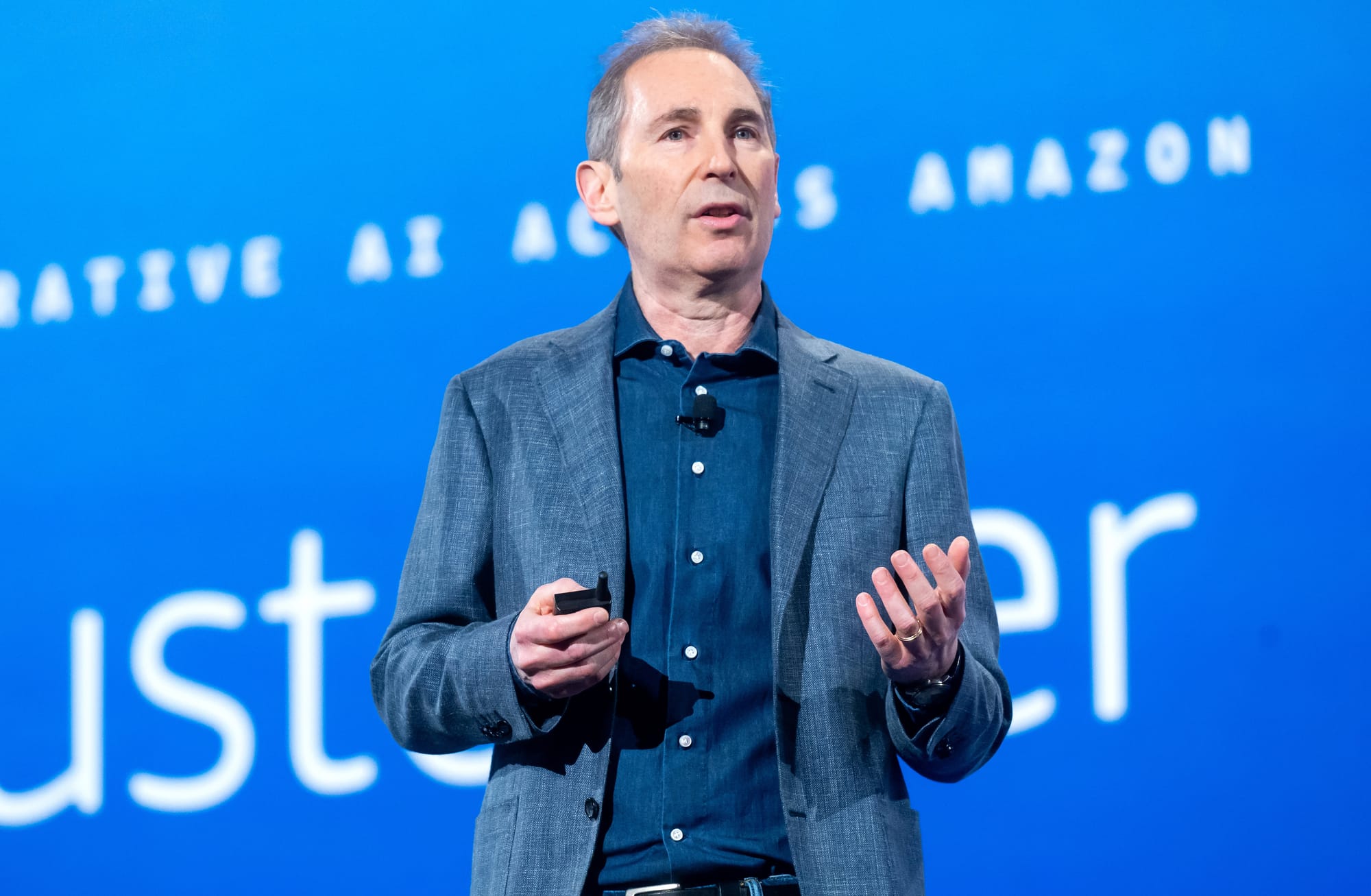
Wednesday night was the most concentrated earnings event of the year. Alphabet, Amazon, Meta, and Microsoft all reported within roughly 80 minutes of each other, per Bloomberg's framing, in what TheStreet's James DePorre called a quarter of the market reporting in a single window. The aggregate 2026 capex commitment heading in, per Yahoo Finance: Meta at $115–135 billion, Alphabet at $175–185 billion, Amazon roughly $200 billion, Microsoft now at $190 billion. Roughly $645 billion in stated infrastructure spend across four companies.
Amazon's piece of the answer: AWS came in at $37.59 billion in the quarter against a $36.64 billion expectation. Another beat. Across all four reports, the cloud businesses grew fast enough to keep the math defensible — which matters because the Nasdaq is heading into the close of its best month since April 2020, up 14% on the month per CNBC, and that rally was built almost entirely on the assumption that this week's prints would validate the spend.
What changes if it holds: the AI capex trade gets at least another two quarters of runway, and the memory/power/transmission ecosystem underneath it gets re-rated upward. What failure looks like: cloud growth decelerates next quarter while capex keeps climbing, and the bear case — that hyperscalers are spending GDP-of-Portugal numbers chasing a revenue line that grows in the high-30s — becomes the consensus instead of the contrarian view. The signal: watch whether any of the four guides capex down on next quarter's call. None of them did this round. That's the tell.
Booking Holdings Just Told You Where the Strait of Hormuz Closure Is Landing
While the hyperscalers absorbed all the oxygen, Booking Holdings dropped 5% on the day Wednesday after cutting guidance and naming the cause directly: the Middle East conflict, per Schwab's market update. That matters because Booking is the largest online travel platform in the world. It sees airline bookings, hotel reservations, and rental car demand in real time across every major market. When that company names a specific geopolitical event in a guidance cut, it's not narrative-building — it's data.
The Strait of Hormuz is functionally constrained, with transit volumes a fraction of normal as insurers withdraw cover and tanker operators reroute, per Plus500's market commentary. US-Iran talks have stalled.
What changes if Booking's guidance cut is the leading indicator: airlines and hotel chains follow with similar language over the next two weeks, and the market finally has to mark down the consumer discretionary complex against a Hormuz disruption it has so far priced as transitory. What "this is contained" looks like: Exxon and Chevron, both reporting Friday, raise production guidance — which would signal majors view the disruption as a pricing event, not a structural one. The signal to watch: whether any major US carrier names "Middle East" in its next earnings release. Booking just made that language permissible. The first airline that uses it tells you the contagion is real.
⚡ What Most People Missed
- Constellation Energy insiders cancelled their selling plans and bought instead: A cluster of Form 4s posted late Wednesday shows several Constellation executives terminating their 10b5-1 plans and executing roughly $4.2 million in open-market buys. Cancelling a pre-scheduled selling program to buy is one of the loudest insider signals available — management is choosing exposure over liquidity. Block-desk chatter ties it to a possible hyperscaler power purchase agreement, but until contracts are filed, that's rumor.
- Quanta Services drew a $1.2 billion 13F position: A Q1 13F amendment landed on EDGAR showing a roughly $1.2 billion new institutional position in Quanta Services — the company that builds the high-voltage transmission and substations that connect hyperscaler data centers to the grid. The thesis writes itself: don't buy the GPUs, buy the substations. The bottleneck of the AI buildout is increasingly electrical, not silicon.
- A House Armed Services Committee member disclosed an AeroVironment options buy: A Periodic Transaction Report filed with the House Clerk on April 23, 2026 shows a senior House Armed Services Committee member bought $500K–$1M in out-of-the-money September AVAV calls, per Capitol Trades. Vendor options data shows a matching sweep in the same chain minutes before the close. Congressional disclosure plus options sweep is the higher-probability version of this signal.
- A $4.4 million Humana call sweep hit at-the-money on the ask: Cheddar Flow flagged a roughly $4.4 million call sweep in HUM — June 18 $235 calls, bought on the ask, essentially at-the-money. "On the ask" is the urgency tell; passive money works the bid. Managed care isn't where the loud flow normally lives, which makes a quiet seven-figure upside print there more interesting than another semiconductor sweep.
📅 What to Watch
- If any of the four hyperscalers guides capex down on the next earnings call, the AI infrastructure trade loses its self-reinforcing logic — and the memory, power, and transmission names that have been riding the second derivative would likely see equity multiples compress and underperform the hyperscalers.
- If a US airline names "Middle East" in its next earnings release, Booking Holdings stops being an outlier and becomes the leading edge of a consumer discretionary downgrade cycle the market hasn't priced.
- If Form 4s filed Friday or Monday show insider buying at Meta, Microsoft, Alphabet, or Amazon, the post-earnings repositioning is unusually conviction-led; if instead the filings show only scheduled 10b5-1 sales, executives are taking liquidity into strength.
- If Exxon or Chevron raises 2026 production guidance Friday, the majors are telling you they view Hormuz as temporary — which would be the strongest counter-signal to Booking's guidance cut available this week.
- If the Senate floor schedule delays a confirmation vote on Kevin Warsh past the June Federal Open Market Committee meeting after Senate Banking Committee consideration, the Fed walks into its most consequential rate decision of the year with a lame-duck chair and a successor with a public record of wanting to rewrite the framework — and the long end of the curve will price that ambiguity well before the floor vote.
The Closer
Eighty minutes of earnings, $645 billion of pledged spend, and a travel CFO quietly admitting the war showed up in the booking data. Somewhere in suburban Maryland, a member of the House Armed Services Committee bought drone calls and a Constellation executive tore up a sell plan, and the most honest read of today's tape is that the people who know things are buying transmission lines and uranium while the rest of us argue about Azure growth to the decimal.
Trade the convergence. Distrust the consensus.
Forward this to the friend who keeps asking why their utility ETF is outperforming their semis ETF.