Brain & Mind Weekly — Apr 22, 2026
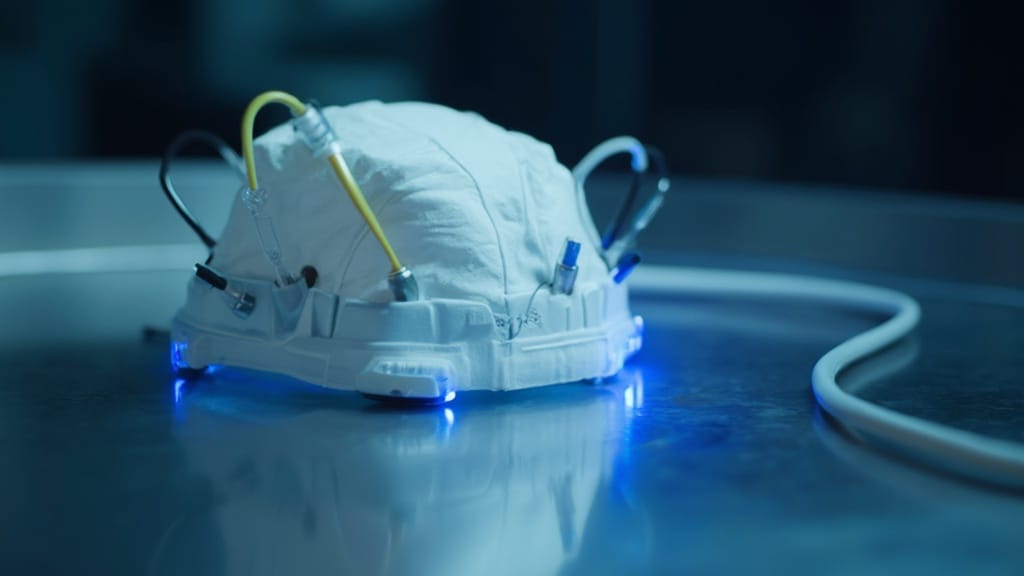
Photo: lyceumnews.com
Week of April 22, 2026
The Big Picture
The brain had a mechanistically rich week — not a revolutionary one, but one where several old stories got sharper new endings. Alzheimer's damage was traced through a cholesterol-clogged waste-disposal system. Arthritis pain was pinned to a molecular alarm that never shuts off in sensory neurons. And a massive mouse-brain foundation model ran headlong into a wall that suggests the bottleneck in computational neuroscience isn't compute — it's biology's refusal to hand over enough data. A quieter thread ran beneath all of it: the field is asking, in several places at once, whether the categories it inherited — DSM symptom lists, Hebbian learning, neuron-only circuits — are actually the right units of analysis.
What Just Shipped
- OmniMouse foundation model (Sinz / Ecker / Tolias labs): A transformer trained on 150 billion neural tokens from 3.3 million mouse visual-cortex neurons, open for community fine-tuning.
- SynTrogo synapse-remodeling tool (Nature Communications): A synthetic system that recruits astrocytes to reshape synaptic connectivity on demand.
- Neuralink Blindsight trial update (Neuralink): First human implants of the cortical visual prosthesis are progressing under the FDA's breakthrough device designation, per Neuralink communications.
- Mouse CNS epigenome atlas (Nature Neuroscience, April issue): Single-nucleus chromatin accessibility and histone-mark profiles across adult brain regions — infrastructure for white-matter and aging research.
- Orthogonal near-infrared optical switch (preprint): Dual-wavelength wireless neuromodulation system using upconversion nanoparticles for clean on/off control of step-function opsins in freely behaving mice.
This Week's Stories
The Brain's Garbage Truck Has a Cholesterol Problem — and Alzheimer's Is Exploiting It
Most people know that Alzheimer's involves amyloid plaques — sticky protein clumps between neurons. What's been murkier is how those plaques actually damage the brain. A new study in Nature Neuroscience offers a surprisingly specific answer, and it puts the janitors on trial.
The chain of events runs like this: amyloid-β triggers a surge of calcium signaling inside astrocytes — the star-shaped support cells that help clear metabolic waste. That calcium surge pushes astrocytes to overproduce cholesterol, which gums up the glymphatic system, the brain's overnight waste-clearance plumbing. With the drains clogged, toxic proteins accumulate faster. In the mouse model, targeting either astrocyte calcium or cholesterol restored clearance and improved cognition.
What changes if this holds up: drug developers get a target that sits upstream of the lecanemab-style antibody approach — and one that could, in principle, work in patients for whom amyloid removal comes too late. What failure looks like: the cholesterol pathway turns out to be a downstream marker rather than a lever, and cognition doesn't budge in human trials. Watch whether any existing cholesterol-modulating drugs get repurposed into early-stage Alzheimer's pilots over the next 18 months.
Your Arthritis Pain Isn't in Your Joints Anymore — It's in Your Neurons
Here's a maddening reality millions of people with rheumatoid arthritis know firsthand: the inflammation gets treated, the swelling goes down — and the pain stays. For years, this was chalked up to joint damage or patient psychology. A new Nature Neuroscience paper says the real answer is molecular, and it's in the nervous system itself.
Su and colleagues show that inflammatory arthritis pain is driven by sustained interferon-driven MNK1/MNK2–eIF4E signaling that sensitizes joint-innervating sensory neurons. Even after the immune attack subsides, this molecular alarm keeps firing, leaving the neurons in a hypersensitive state. Blocking the pathway reverses the pain in mice.
What changes if this holds up: chronic arthritis pain becomes a neurological problem with existing drug candidates — MNK1/MNK2 inhibitors already exist from oncology programs and could be repurposed. What failure looks like: human sensory neurons use a partly different pathway, and the mouse reversal doesn't translate. The signal to watch is whether a pharma program picks up an MNK inhibitor for a chronic-pain indication in the next year.
The Adult Human Brain May Really Be Making New Neurons After All
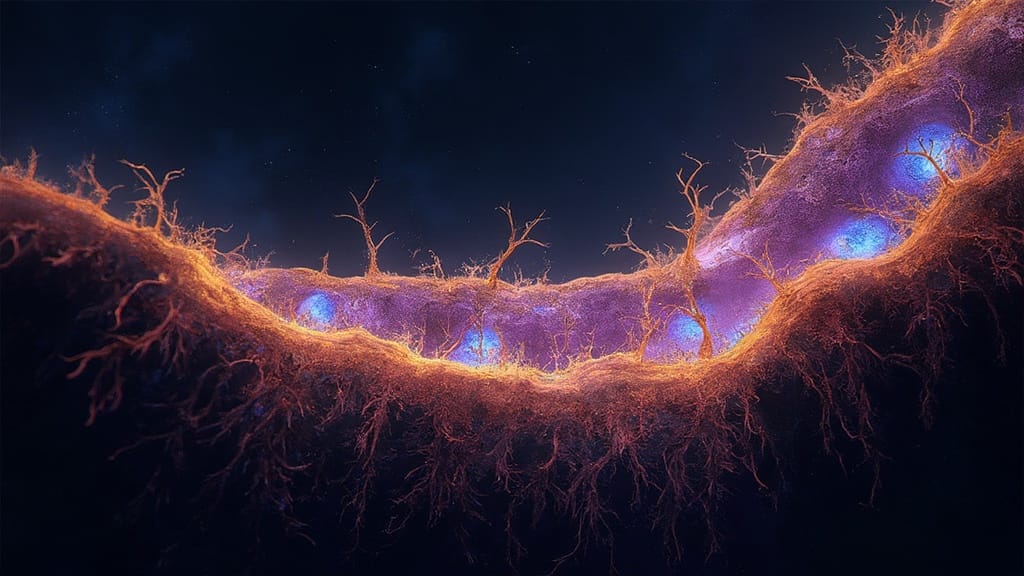
Few neuroscience arguments have refused to die as stubbornly as this one: does the adult human brain still make new neurons? A Nature paper this week tackled it with single-nucleus RNA sequencing and chromatin profiling across age and disease, reporting a molecular trajectory consistent with ongoing neurogenesis in the human dentate gyrus — and a signature suggesting the pipeline stalls in Alzheimer's samples.
Nature's coverage tied these signatures to the so-called "SuperAgers" — older adults whose memory stays youthful — suggesting resilience involves a coalition of new neurons, mature circuits, and supportive glia.
What changes if this holds up: aging and Alzheimer's get reframed as dysfunctions of a fragile cellular pipeline, not just cell loss — which opens intervention points rather than just damage control. What failure looks like: independent labs fail to replicate the chromatin signatures, and the field returns to its stalemate. Watch for reanalyses from groups that have historically been skeptical — their response in the next two months will tell you whether this is a consensus-forming moment or the next round of a long fight.
Your Cerebellum Is Running Probability Calculations You Never Knew About
The cauliflower-shaped structure at the back of your skull has always been described as the brain's movement coordinator. That description is getting a significant upgrade.
A Nature Neuroscience study shows that cerebellar circuits learn and encode prior probabilities of event timing — with cell-type-specific activity reflecting environmental statistics and guiding predictive motor behavior. In plain language: the cerebellum doesn't just execute movements, it builds internal models of when things are likely to happen and prepares the body in advance. This is Bayesian inference — the brain updating predictions based on experience — implemented in specific cell types.
What changes if this holds up: cerebellar disorders like ataxia get rethought as prediction failures, not just coordination failures, and the cerebellum's documented roles in cognition and emotion start to make more sense. What failure looks like: the cell-type signals turn out to reflect generic timing rather than probability-weighted prediction, and the Bayesian framing quietly deflates. Watch whether the same cell-type logic shows up in cerebellar recordings during non-motor tasks.
Northwestern Just Printed Neurons That Talk to Real Ones
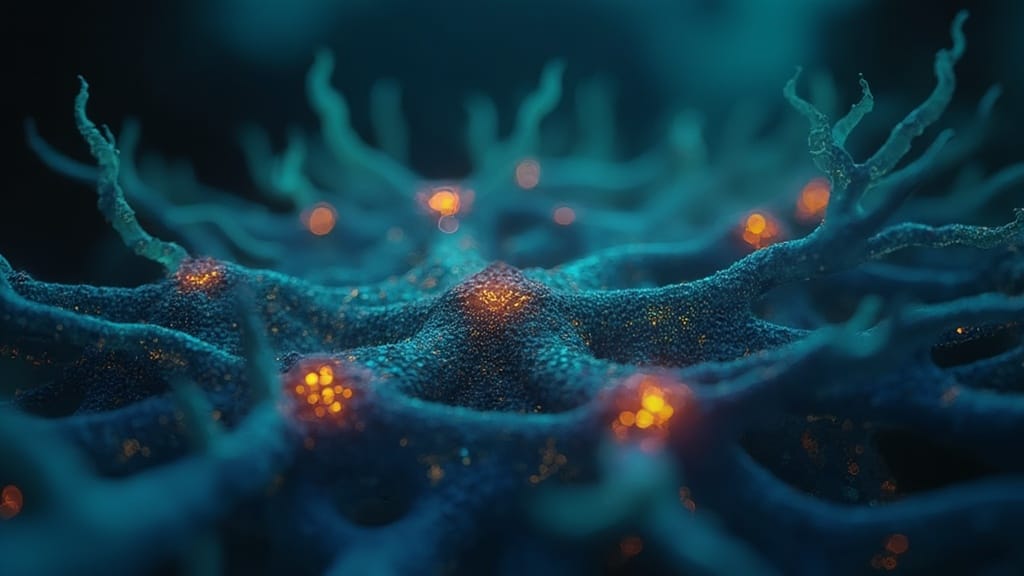
Brain-computer interfaces have always faced the same fundamental problem: electronics and biology don't speak the same language. Metal electrodes record electrical signals, but they don't communicate with neurons the way neurons communicate with each other.
Engineers at Northwestern printed artificial neurons that generate lifelike action potentials — the precise electrical spikes neurons use to talk to each other — and can participate in neural conversations rather than just eavesdrop. The devices are flexible and low-cost, which matters enormously for chronic implants that need to survive years inside living tissue without scarring.
Both advances described below illustrate different strategies for improving brain-machine communication: a biomimetic, biohybrid approach (Northwestern) and miniaturized, clinical-grade implants (Neuracle).
What changes if this holds up: neural interfaces start looking less like electrodes and more like grafts — you don't just read the brain, you extend it. What failure looks like: the "communication" works in dish but collapses in vivo under immune response, which has killed many promising interface materials. Watch for the first behaving-animal recordings; that's the honest test.
Meanwhile, China cleared what appears to be the first commercial implantable BCI — Neuracle's coin-sized NEO device for severe spinal-cord injury — and parallel clinical programs (WRS01/BRS01 flexible-thread systems) keep posting patient demos. Reporting from the Institute of Neuroscience and Xinhua describes minimally invasive, high-channel-count systems aimed at single-neuron fidelity. Sources: ION, CAS
A Protein That Keeps Axons Alive Just Got Its Job Description
Axons — the long cables that carry signals from one neuron to the next — are not passive wires. They require active maintenance, and when that maintenance fails, neurons die. A Journal of Neuroscience paper published April 17 pins down what one critical maintenance protein actually does in adult brains.
LIS1 is already known to be essential during brain development — mutations cause lissencephaly, where the brain's surface fails to fold. The new work shows LIS1 keeps working in adult neurons, specifically maintaining the structural integrity of axons long after development is complete. Remove it from adult mice, and axons degrade even in neurons that formed normally.
What changes if this holds up: LIS1 becomes a candidate contributor to the axon loss seen in ALS, Alzheimer's, and related disorders, and subtle LIS1 dysfunction joins the list of things worth screening for in adult neurodegeneration. What failure looks like: the axon loss turns out to be a generic response to any major developmental protein's absence, and LIS1 doesn't earn special status. The tell will be whether human neurodegeneration cohorts show LIS1 expression changes.
A Foundation Model Just Hit a Wall That Says More About Biology Than AI
The biggest shift in AI over the past decade was the realization that scaling models on enormous data beats clever small models. Neuroscience is now running the same experiment on actual brain data — and the result is unexpected.
OmniMouse, a preprint from the Sinz, Ecker, and Tolias labs under review at ICLR 2026, trained multi-modal transformers from 1M to 300M parameters on 150 billion neural tokens — 3.3 million neurons from the visual cortex of 78 mice across 323 sessions. Feeding the model more diverse neural data steadily improved performance. But simply scaling parameter count produced hard saturation. More model didn't help; more biology did.
What changes if this holds up: funding priorities shift toward large, naturalistic, multi-lab data collection rather than compute budgets, and brain modeling becomes a coordination problem more than a math problem. What failure looks like: the saturation turns out to be an artifact of training choices, and the next scaling regime quietly resumes. Watch whether major consortia start publishing standardized recording datasets at unusual scales over the next year — that's how you'll know which way the field bet.
⚡ What Most People Missed
The "stop eating" signal is a multi-cell relay. New work suggests rising post-meal glucose activates tanycytes, which pass a lactate message to astrocytes, which release glutamate to trigger hypothalamic satiety circuits. The neuron-only model of appetite is out; astrocyte receptors are now a plausible drug target for obesity and metabolic disease.
Blood-flow imaging may be averaging two opposite neural populations. A Nature paper pairing functional ultrasound with Neuropixels shows hemodynamic signals can reflect opponent populations with opposite relationships to arousal. That complicates everything built on fMRI and hemodynamic proxies — bigger datasets won't fix modeling unless we understand what the measurements actually mean.
Concept cells may not wire up the way your textbook says. A bioRxiv preprint argues that classical Hebbian learning can't account for how concept cells in the medial temporal lobe form associative engrams — the brain's edge density is too low for the preexisting synapses the theory requires. Early-stage, but it challenges a fifty-year-old assumption about memory and identity recognition.
Childhood sensory over-responsivity just got a reproducible neural signature. A bioRxiv preprint reports specific, replicable behavioral and neural correlates for kids who are unusually distressed by everyday sounds or touch — a phenotype usually waved away or folded into autism or anxiety diagnoses. Cleaner stratification for trials, cleaner targets for intervention.
Glioblastoma is recruiting the brain's insulators. Recent preclinical work shows reactive oligodendrocytes sending pro-survival signals to glioma stem cells; blocking that crosstalk dramatically reduced tumor expansion in lab models. The tumor isn't just rogue cells — it's an ecosystem that turns neighboring support cells into accomplices.
📅 What to Watch
- If independent labs replicate the adult neurogenesis chromatin signatures within two months, it means aging research can finally stop arguing about whether new neurons exist and start asking how to protect the pipeline.
- If a pharma team moves an existing MNK1/MNK2 oncology inhibitor into a chronic-pain trial, the interferon-to-neuron pain pathway will compress a typical decade-long drug-development timeline into roughly three years.
- If the FDA publicly responds to the Neuracle NEO approval, it will signal that geopolitical pressure — not clinical data — is shaping how fast U.S. patients get access to implantable BCIs.
- If synapse-remodeling tools like SynTrogo move from cell culture into organoids or behaving animals, astrocytes formally graduate from "disease bystander" to "programmable therapeutic substrate," changing trial design and endpoint selection.
- If major consortia start publishing standardized, cross-lab neural recording datasets at unusual scales, the OmniMouse saturation finding has been taken seriously and the field has chosen biology over compute.
- If the APA's DSM revision working groups acknowledge new evidence reorganizing ADHD subtypes in public communications, psychiatric diagnosis may begin to restructure checklists around patient-reported symptom clusters rather than legacy categories.
The Closer
A cholesterol-clogged glymphatic drain, an artificial neuron printed into a conversation with a real one, and a 300-million-parameter model politely declining to get any smarter because the mice haven't filed enough paperwork. Somewhere in the stack is the uncomfortable implication that the brain has been telling us for years which symptoms matter, which cells do the talking, and which signals our machines were averaging into mush — and the DSM, the textbook, and the fMRI scanner all said thank you, we'll take it from here. Back next week.
Forward this to the friend who still thinks astrocytes are just scaffolding.