Biotech & Life Sciences Weekly — Apr 21, 2026
Photo: lyceumnews.com
Week of April 21, 2026
The Big Picture
This was the week biology's ambition level jumped a rung: a Harvard team showed you can silence most of an entire extra chromosome at once, the FDA told genome-editing developers exactly how it wants them to prove safety, and French policy quietly rewrote the economics of enzymatic plastic recycling. Underneath the clinical headlines, the engineering stack is maturing — protein design is becoming a search problem, structure prediction is learning to move, and fermentation capacity is migrating to India and Thailand. The through-line: biology is graduating from breakthrough generator to engineering discipline, which means clearer standards, harder data, and more attention to whether things work at scale instead of just on a slide.
What Just Shipped
- RosettaSearch (arXiv preprint): Multi-objective inference-time search framework for protein sequence design — treats design as navigation across competing objectives rather than single-pass generation.
- ConforNets (arXiv preprint): Latent-based conformational control layer for OpenFold3, letting users dial through open, closed, and intermediate protein states from one sequence.
- PALINCODE (bioRxiv preprint): Cell-lineage recorder using ternary palindromic CRISPR bits to increase information density per edit.
- FDA Draft Guidance on Genome Editing Safety (U.S. FDA, April 14): Standardized expectations for off-target and genome-integrity assessment using NGS and orthogonal assays; public comment period open.
- Carbios Longlaville update (Carbios): 50,000-ton/year PET biorecycling plant plans confirmed, schedule revised; France's per-ton bonus for biorecycled plastics reshaping offtake math.
- Eclipse Ingredients (CSIRO spinout): New Australian company launched to produce human lactoferrin via precision fermentation.
This Week's Stories
CRISPR Just Learned to Silence an Entire Chromosome
Every CRISPR therapy you've heard about targets one gene, maybe two. Down syndrome has hundreds of dysregulated genes, all because of a single extra copy of chromosome 21 — which is why, 67 years after the condition was linked to trisomy 21, there is still no molecularly targeted treatment. A paper published this week in PNAS by researchers at Beth Israel Deaconess Medical Center and Harvard Medical School suggests that ceiling may finally be cracking.
The team borrowed a trick biology already uses. XIST is the long noncoding RNA that naturally silences one X chromosome in female mammals — the reason having two X's doesn't double the gene dosage. The idea: insert XIST into the extra chromosome 21 and let it do what it evolved to do. Past attempts failed on delivery — conventional CRISPR is good at cutting but terrible at inserting large sequences, and you need to hit only one of three chromosome copies in as many cells as possible. The Harvard team fused Cas9 to an exonuclease and used SNP-specific guide RNAs to target a single chromosome copy, improving XIST integration roughly 30-fold over conventional CRISPR, with integration efficiencies of 20–40% across cell lines in the study. RNA sequencing showed gene-transcription imbalance across the extra chromosome was partially corrected.
What changes if this succeeds: chromosome-scale silencing becomes a legitimate therapeutic modality, and a class of conditions previously considered untreatable — trisomies, large duplications, maybe even some cancer karyotypes — gets a first conceptual handhold. What failure looks like: off-target silencing, immune responses to XIST insertion, or the edited stem cells simply not surviving engraftment. The signal to watch is whether the team can replicate results in neurons specifically, and whether the FDA's new genome-integrity guidance (see below) serves as a bottleneck or a roadmap. This is stem cells in a dish — no animals, no patients — but the engineering advance is real.
The FDA Just Told Genome Editors Exactly How to Prove Safety
On April 14, the FDA released draft guidance spelling out how genome-editing developers should assess off-target edits and genome integrity using next-generation sequencing and orthogonal assays. This is less glamorous than an approval and more consequential than most approvals.
Standard-setting can help fields move faster. Right now, every company running a CRISPR or base-editing program invents its own off-target panel, its own bioinformatic pipeline, its own story about why their particular assay is sufficient. Reviewers have to evaluate each one on its own terms, which slows everything. A common evidence bar means submissions become predictable, tool vendors converge on shared benchmarks, and capital flows toward the teams that can meet the bar cleanly.
What changes if this sticks: the measurement stack becomes part of the product, and companies with strong analytical chemistry start outcompeting companies with only clever editors. What failure looks like: industry pushback forces iterative renegotiation, evidentiary requirements drift, and the guidance becomes another document nobody quite follows. Watch the public comment period and whether trade groups — particularly the Alliance for Regenerative Medicine — file coordinated responses pushing for tailored flexibility on cell and gene therapies. And watch how this interacts with the Harvard chromosome-silencing work: ambitious edits will need genome-wide evidence they didn't create large-scale rearrangements, and that measurement burden is suddenly much more specific.
A First-of-Its-Kind Allogeneic T-Cell Therapy Crossed the FDA Finish Line
CAR-T works, but it's bespoke — a patient's own cells, extracted, engineered, reinfused, weeks of turnaround, hundreds of thousands of dollars, and unavailable to patients too sick to wait. Orca Bio's Orca-T is the off-the-shelf alternative: a precision-engineered mix of regulatory T-cells, hematopoietic stem cells, and conventional T-cells sourced from matched donors, manufactured in advance. The PDUFA date was April 6; the BLA covers acute myeloid leukemia, acute lymphoblastic leukemia, and myelodysplastic syndromes. Clinical data showed reduced rates of graft-versus-host disease compared to standard stem cell transplants — the key safety argument for the allogeneic approach.
What changes if this succeeds: the "cell therapy must be personalized" assumption starts eroding, and the manufacturing math gets dramatically better for any downstream indication that can tolerate donor matching. What failure looks like: a restrictive label that confines Orca-T to narrow donor-match scenarios, leaving it as a niche option rather than a platform. Watch the formal approval language and how quickly community transplant centers can onboard — that's where allogeneic's accessibility promise gets tested.
Protein Design Gets a Search Engine — and a Choreographer
Two preprints dropped this week that, together, reframe what computational protein design is actually for. RosettaSearch treats design as a multi-objective search problem: instead of sampling sequences and hoping one is good, it explicitly navigates trade-offs between stability, binding, expressibility, and manufacturability using the Rosetta energy function alongside learned sequence models. ConforNets, posted days later, adds the dimension that AlphaFold and its descendants quietly ignored — motion. By introducing latent-based conformational control to OpenFold3, users can dial through the open, closed, and intermediate states a single sequence can occupy, rather than getting one static snapshot.
What changes if both hold up: industrial protein engineers stop asking "what's the best sequence?" and start asking "what's the best sequence that also moves correctly and satisfies five other constraints?" — which is the actual question that decides whether an enzyme works at scale or a drug locks a target in the right conformation. The convergence matters: when multiple independent groups ship inference-time search plus dynamics-aware modeling in the same week, that's usually a field-wide shift in how people think about the generation-versus-search trade-off.
What failure looks like: benchmark numbers that don't survive wet-lab validation, the classic gap between computational candidates and expressed, functional proteins. Watch for experimental validation on enzyme engineering benchmarks — that's where computational protein design still loses most credibility contests.
PALINCODE Teaches Cells to Record Their Own Family Trees
A single fertilized egg becomes trillions of cells, and the lineage relationships between them — which liver cell is cousin to which neuron — are almost entirely invisible. Reconstructing those trees matters for cancer biology (tumors are clonal expansions), regenerative medicine, and cell therapy safety. The problem has always been storage: CRISPR-based lineage recorders run out of writable DNA before the tree gets deep enough to be useful.
A bioRxiv preprint this week introduces PALINCODE, which exploits the symmetric geometry of palindromic DNA sequences to record ternary information — cut, uncut, or partially modified — at each site, increasing information density per edit. Think of it as a microscopic flight data recorder with a bigger alphabet.
What changes if this scales: dense lineage recording moves from developmental-biology curiosity to practical infrastructure for engineered cell therapies — imagine CAR-T cells that log every antigen encounter inside a patient, readable after the fact by sequencing. What failure looks like: editing kinetics uneven across generations, the signal degrading as cells divide, the method working beautifully in HEK293 cells and nowhere else. Watch for validation in organoids or developing embryos — that's where recorders have historically stumbled.
The Kidney Drug With No Competition Faces a Decision Next Week
Focal segmental glomerulosclerosis is a leading cause of end-stage renal disease and has no FDA-approved treatment specifically for it. That could change April 28, when Travere Therapeutics' sparsentan — already approved as Filspari for IgA nephropathy — faces its PDUFA date for FSGS. The submission package includes the Phase 3 DUPLEX and Phase 2 DUET studies, which showed significant proteinuria reduction versus the angiotensin II blocker irbesartan, and significantly more patients reaching the clinically meaningful 0.7 g/g proteinuria threshold associated with long-term kidney preservation.
What changes if approved: FSGS gets its first indicated therapy, and proteinuria gets further entrenched as a validated surrogate endpoint — which matters for every other kidney-disease program in development. What failure looks like: a complete response letter asking for more outcome data, or an accelerated rather than full approval with a post-marketing commitment that delays real uptake. The distinction between accelerated and full approval is the signal to watch: it tells you how the FDA is weighing surrogate endpoints across the nephrology pipeline.
The Enzymatic Recycling Math Finally Adds Up in France
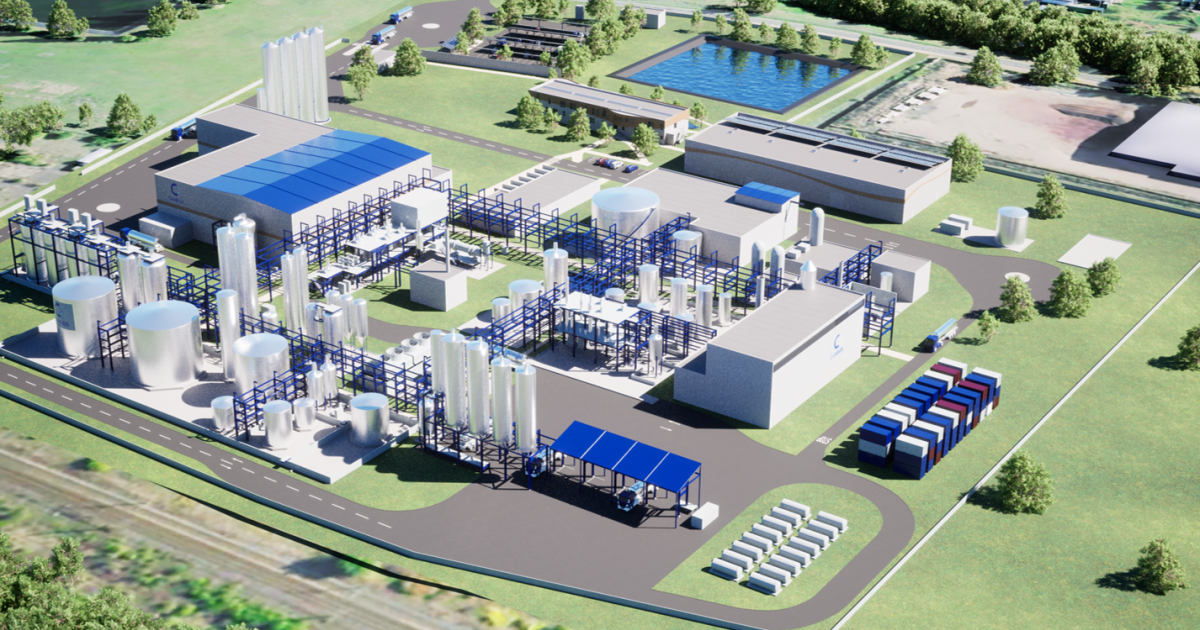
Enzymatic PET recycling — engineered enzymes dissolving plastic bottles back to virgin-quality monomers — has been "almost competitive" for years. This week, Carbios confirmed progress on its 50,000-ton/year Longlaville plant while revising the schedule, and the economic context has materially shifted: France introduced a regulatory premium (reported at roughly €1,000 per ton) for biorecycled plastics in food-contact applications, and Carbios has pre-sold approximately half the plant's capacity to consumer brands.
What changes if Longlaville commissions on schedule: the first industrial-scale proof that enzymatic depolymerization can compete with virgin PET, and a template other jurisdictions copy — regulatory price premiums are the fastest known way to manufacture a market for industrial biology outputs. What failure looks like: further schedule revisions, financing gaps, or the enzyme's performance degrading at plant scale in ways that never showed up in pilots. Watch whether other EU member states or U.S. states introduce similar premiums; watch whether Carbios converts pre-sales into binding offtake. Biology rarely fails in the lab — it fails at the plant.
⚡ What Most People Missed
- Fermentation capacity is quietly shifting east. Laurus Bio announced a 500-kiloliter R3 plant in India as part of a 2-million-liter vision, and Novonesis is buying a fermentation facility in Rayong, Thailand. The story isn't tank count — it's that CDMO-style shared infrastructure is scaling in lower-cost geographies, which changes the negotiating position of every synbio startup that currently has to choose between building capacity and running out of runway.
- CSIRO spun out Eclipse Ingredients to make human lactoferrin via precision fermentation. The strategic lesson is about customer selection: startups are targeting the hardest-to-source, highest-value ingredients first — lactoferrin, not bulk dairy protein — because specialty margins are the only way to fund the capex before commodity unit economics arrive.
- A Nature Communications paper described an engineered E. coli Nissle 1917 probiotic that suppresses enterohemorrhagic E. coli through nutrient competition plus virulence-gene suppression, reducing pathogen colonization in mice while preserving the resident microbiome. This is the shift from "take a probiotic" to programmable, target-specific living therapeutics — and it's happening quietly in peer-reviewed journals rather than on pitch decks.
- The USDA APHIS public comment window closed April 20 on a petition to deregulate an insect-resistant soybean. These windows are where ag-biotech actually lives or dies — trait commercialization depends on regulatory throughput, not clever edits — and the soybean decision will signal how the Trump administration's USDA is handling transgenic deregulation this cycle.
- The European Parliament's New Genomic Techniques framework faces a plenary vote in May. If Category 1 CRISPR crops — edits indistinguishable from natural variation — get equivalence with conventional breeding, a decade of stalled European ag-biotech programs starts moving. The CRISPR-edited Trichoderma reesei fungus generating buzz on Hacker News is a preview: fungal fermentation sidesteps GMO headwinds because the edits don't involve foreign DNA insertion, which is exactly the category the NGT framework is built to unlock.
📅 What to Watch
- If the FDA's genome-editing guidance survives public comment largely intact, expect a wave of M&A targeting the off-target-assay toolmakers — the measurement stack becomes strategic infrastructure, not a vendor line item.
- If sparsentan gets full rather than accelerated approval on April 28, every nephrology program currently debating whether to power for hard outcomes will quietly pivot toward proteinuria endpoints, shortening development timelines for programs that accept that surrogate.
- If the Harvard team replicates chromosome-21 silencing in neurons specifically, expect at least one major pharma to open a chromosome-scale editing discovery program within two quarters — trisomies and large duplications become a legitimate category.
- If Carbios closes Longlaville financing on the revised schedule, watch U.S. state legislatures (California, New York) for copycat per-ton premiums — the French model is portable and the policy template is already written.
- If Orca-T's label permits unrelated matched donors without additional restrictions, the cost curve for allogeneic cell therapy bends faster than most analysts are modeling, and autologous CAR-T pricing looks exposed.
- If multiple protein-design groups start citing RosettaSearch and ConforNets together in submissions, the field has quietly standardized on "search plus dynamics" as the new default — and the single-shot generation era is over.
The Closer
This week: a CRISPR editor muzzling an entire chromosome, a French policy wonk making plastic bottles worth €1,000 a ton, and a palindromic flight recorder scribbling a cell's memoirs into its own DNA. Somewhere in Rayong, a Thai fermentation tank is being bought by Danish enzyme engineers.
Keep your pipettes calibrated.
Forward this to the friend who still thinks CRISPR is the one where they edit a single gene.