The Academy — Apr 24, 2026

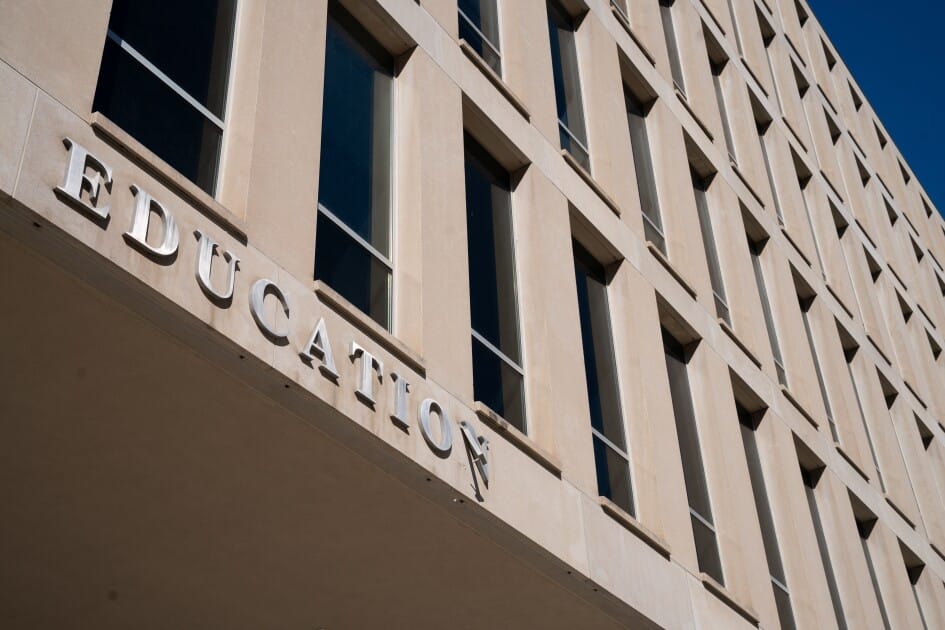
Photo: lyceumnews.com
Week of April 24, 2026
The Big Picture
Two Massachusetts colleges closed in a single month, Khan Academy announced a $10,000 AI bachelor's degree, and the federal government quietly moved $1.4 billion in career-and-technical-education funding from one agency to another. None of these are rhetorical moves. The architecture of American education is being renegotiated in real time — and the people most exposed are the ones who can least afford a wrong turn.
What Just Shipped
- Khan TED Institute (Khan Academy, TED, ETS): Joint venture announcing a sub-$10,000 applied AI bachelor's degree, with applications targeted to open in 12–18 months.
- Proposed Student Tuition and Transparency System rule (U.S. Department of Education): April 20 Notice of Proposed Rulemaking tying Direct Loan eligibility to graduate earnings benchmarks.
- State Apprenticeship Expansion Formula grants, Round 4 (U.S. Department of Labor): $85 million announced April 13, with states required to publish average program approval times.
- Draft 2026–27 apprenticeship funding rules (UK Department for Education / Skills England): Published April 22, folding in the new Growth and Skills Levy and formally separating Skills Bootcamp eligibility from apprenticeship funding.
- FastForward workforce credential grant top-up (Commonwealth of Virginia): Floor-approved budget amendment adding $9.5 million in FY27 and $2.7 million in FY28 to address a community-college program backlog.
This Week's Stories
Massachusetts Just Lost Two Colleges in One Month — and the Autopsy Is Instructive
If you want to understand what the next decade of small-college closures actually looks like, Massachusetts just handed you a live case study — twice.
Anna Maria College in Paxton announced on April 23 that it will cease academic operations at the end of the spring 2026 semester. The decision reflected "years of financial pressure that we were ultimately unable to overcome," according to a message from college president Sean J. Ryan and trustees chair David P. Trainor. The college's most recent audit shows an endowment valued at just $1.5 million at the end of fiscal year 2025, per Inside Higher Ed. That's roughly what a mid-sized community college spends on facilities maintenance in a year.
Here's the kill shot most coverage buries: despite spring enrollment being up 7.5% year-over-year on the spring term and fall deposits running ahead of prior years, the FY2025 audit carried a going-concern qualification — a formal statement of substantial doubt about the institution's ability to continue operating. That, Spectrum News reported, came amid new restrictions on the college's administration of federal financial aid. Amid constrained access to Pell and federal loans, enrollment can collapse within a single cycle.
Anna Maria is the second Massachusetts institution to announce closure this month, following Hampshire College. If Anna Maria succeeds at a soft landing — orderly teach-outs, records stewardship, student transfers — it becomes a template other states adopt. If it doesn't, expect the improvisation tax to fall on students. Watch for which accreditors and state agencies start standardizing runoff protocols, and watch Massachusetts' Financial Assessment and Risk Monitoring system for which campus gets flagged next.
Sal Khan Wants to Build a $10,000 AI Degree — But First He Needs an Accreditor
The most interesting higher education announcement of the year isn't coming from a university. It's coming from a nonprofit that makes free math videos.
Khan Academy, TED, and ETS — the nonprofit that administers the GRE and TOEFL — have jointly launched the Khan TED Institute, which plans to offer a bachelor's degree in applied AI for roughly $10,000 total, with applications opening in 12 to 18 months. Google, Accenture, McKinsey, Bain, and Replit are signing on as launch partners, per Axios. Students advance by competency rather than seat time, meaning a motivated learner with prior experience could finish faster and cheaper than sticker.
Two details deserve more scrutiny than the announcement got. First, accreditation: the institute doesn't have it yet, and building standalone accreditation from scratch typically takes years. If Khan TED affiliates with an existing accredited institution instead, the timeline compresses dramatically — and that choice is the single best predictor of whether this launches on schedule. Second, and more awkwardly: none of the employer partners have committed to hiring graduates, per the San Francisco Standard. "Co-designing" curriculum is meaningfully different from a hiring pipeline.
If this works, the durable signal is probably assessment, not video lessons. ETS has been piloting skills-transcript infrastructure (its FutureNAV work) at California State campuses and Brandeis. If employers start treating an ETS-backed skills transcript as a real hiring signal, the $10,000 degree becomes a delivery vehicle for something much bigger: a portable, verifiable credential standard that doesn't need a traditional college wrapper. If they don't, this becomes another employer advisory board that never translated into offers.
The Federal Government Just Rewired Who Controls CTE — and States Are Still Figuring Out What That Means
Career and technical education just got a new landlord, and the lease terms are still being written.
The administration has moved day-to-day oversight of CTE programs — including the roughly $1.4 billion in annual Perkins V formula grants that flow to states for K-12 and community college CTE — from the Department of Education to the Department of Labor. The practical complications are immediate: in Colorado, Idaho, Minnesota, Montana, and Wisconsin, the state agency handling Perkins isn't the same one that handles K-12 funding, Education Week reported, meaning those states would essentially start from scratch with Labor's system.
Meanwhile, House Republicans have proposed legislation to codify the interagency handoff; the bill's committee referral and timetable remain unclear. Advance CTE reports the partisan friction has stripped away the broad bipartisan coalition the last reauthorization enjoyed.
The deeper question is whether moving CTE to Labor tilts programs toward short-term job credentials at the expense of the college-pathway programs with the strongest long-term wage outcomes. The observable signal: whether Workforce Pell — the short-term credential aid program slated to launch July 1, 2026 — becomes the de facto funding mechanism for a narrower, more job-training-focused CTE system. If Workforce Pell ends up financing the certificates that Labor prefers, the philosophical shift is complete regardless of what the statute says.
Washington Just Put Another $85 Million Behind Apprenticeships — With a Performance Scoreboard Attached
The Department of Labor announced $85 million in grants on April 13 for the fourth round of State Apprenticeship Expansion Formula grants, tying the formula to new and active apprentice counts and — more interestingly — requiring state apprenticeship agencies to publish average program approval times. That's the bureaucratic equivalent of putting lap times on the jumbotron.
The fine print is where this gets interesting for education leaders. The grant guidance explicitly allows states to use funds to improve alignment between apprenticeship, workforce, and education systems, hire apprenticeship navigators, and help develop related instruction that could qualify for Workforce Pell. Apprenticeship policy is becoming postsecondary policy by other means. If a state like California, Texas, or Ohio uses this round to stitch degree-apprenticeships and high-school-to-apprenticeship pathways into its community college system, community colleges become the biggest operational winners of the CTE reshuffle. If states treat it as routine grant paperwork, apprenticeship growth stalls at the same bottleneck that's frustrated employers for a decade: approval times measured in seasons, not weeks.
The Education Department Just Moved Earnings Accountability From Concept to Rule Text
On April 20, the Department of Education published its proposed rule for a Student Tuition and Transparency System and earnings-accountability framework, tying Direct Loan eligibility to graduate earnings benchmarks. This isn't a think piece or leaked draft. It's a formal Notice of Proposed Rulemaking, built on the January negotiated-rulemaking consensus.
Stack this on top of the Accreditation, Innovation, and Modernization rulemaking — whose second and final session runs May 18–22, per WCET — and you get a two-step gate: accreditation reshapes which programs are eligible for federal aid, and the earnings screen can shut programs down on outcomes. The combined effect lands hardest on short-term workforce credentials and adult-serving online programs, which have the weakest standardized outcome-reporting infrastructure and the thinnest margins.
The programs most likely to be disrupted by outcome-reporting mandates are the short-term workforce programs that have been growing fastest — a second-order effect the mainstream higher ed press isn't connecting. If the May 11 revised draft language softens the earnings trigger or carves out ramp-up time for short-term programs, most institutions can absorb it. If it doesn't, expect a wave of program closures at for-profit and online-heavy providers within 18 months of the rule taking effect. Per Inside Higher Ed, Under Secretary Nicholas Kent opened negotiations by telling critics: "to those who say the changes we are pursuing would upend higher education, I say, 'Yes, that is the point.'"
⚡ What Most People Missed
- The K-12 edtech funding collapse is hiding a workforce boom. Global edtech peaked at $16.7 billion in 2021, and K-12 funding has since crashed 82% since 2021, per a Rest of World analysis drawing on HolonIQ data. Corporate training platforms now command nearly 40% of all VC in the sector as of that analysis. The edtech market has effectively bifurcated into two industries with opposite trajectories, and aggregate numbers obscure which one you're actually looking at.
- Virginia's FastForward budget top-up signals political willingness to expand workforce seats. A floor-approved amendment added $9.5 million in FY27 and $2.7 million in FY28 to the state's workforce credential grant to address "the backlog of high demand programs," per the Virginia Legislative Information System. That demand-outrunning-capacity signal is a leading indicator that could shape 2027 budget negotiations and increase pressure on lawmakers to prioritize workforce spending over other discretionary items.
- The College Board is quietly moving into CTE. The organization synonymous with the SAT and AP is expanding into career pathways, per Education Week. When the ultimate gatekeeper of the traditional academic track starts validating vocational assessments, the prestige hierarchy of American education is fracturing faster than the rhetoric admits.
- England just drew a hard line between Skills Bootcamps and apprenticeships. The draft 2026–27 apprenticeship funding rules state that learners in government-funded Skills Bootcamps cannot also draw apprenticeship funding for the same purpose. Providers marketing "all of the above" workforce training will need to pick a lane.
- Students are already treating AI as routine; campuses haven't caught up. A 2026 Gallup poll finds roughly 57% of U.S. college students use AI at least weekly and about 20% daily (as of 2026 Gallup survey), while a recent survey reported by Inside Higher Ed shows strong public support for teaching AI alongside deep skepticism about its use (as of 2026 survey). That mismatch is the governance problem of the academic year.
📅 What to Watch
- If Khan TED affiliates with an existing accredited institution rather than building standalone accreditation, the $10,000 AI degree could reach market in 12 months instead of 4+ years — and that's the real scaling story, not the sticker price.
- If the May 11 revised accreditation draft preserves the earnings trigger without carve-outs for short-term programs, expect for-profit and online-heavy providers to start preemptively closing catalogs before the rule even takes effect in 2027.
- If a state uses the DOL's $85M apprenticeship round to connect registered apprenticeships with Workforce Pell–eligible instruction, community colleges — not workforce boards — become the operational winners of the CTE handoff.
- If Massachusetts' FARM system flags a third institution this quarter, other states will accelerate adoption of audit-to-public-notice mechanisms, and private-college bond covenants will start repricing across the sector.
- If any major edtech platform publishes independently validated outcomes data on AI-assisted learning this quarter, it becomes the first real evidence base for the entire AI tutoring market — and a moat for whoever publishes first.
The Closer
A Catholic college with a $1.5 million endowment, Khan Academy credentialing AI engineers, and a Game Boy with a crank teaching Duke undergrads how to actually code. The prestige hierarchy of American education is being renegotiated by the people who were never invited to the negotiation, and the accreditation rulebook is being rewritten while students are still walking through the door. Until next week.
Forward this to the dean, the CLO, or the founder who keeps asking what's actually going to matter in 2027.